
Published on August 29, 2026
How to Claim Compensation After a Traffic Accident in Turkey — 2026 Guide
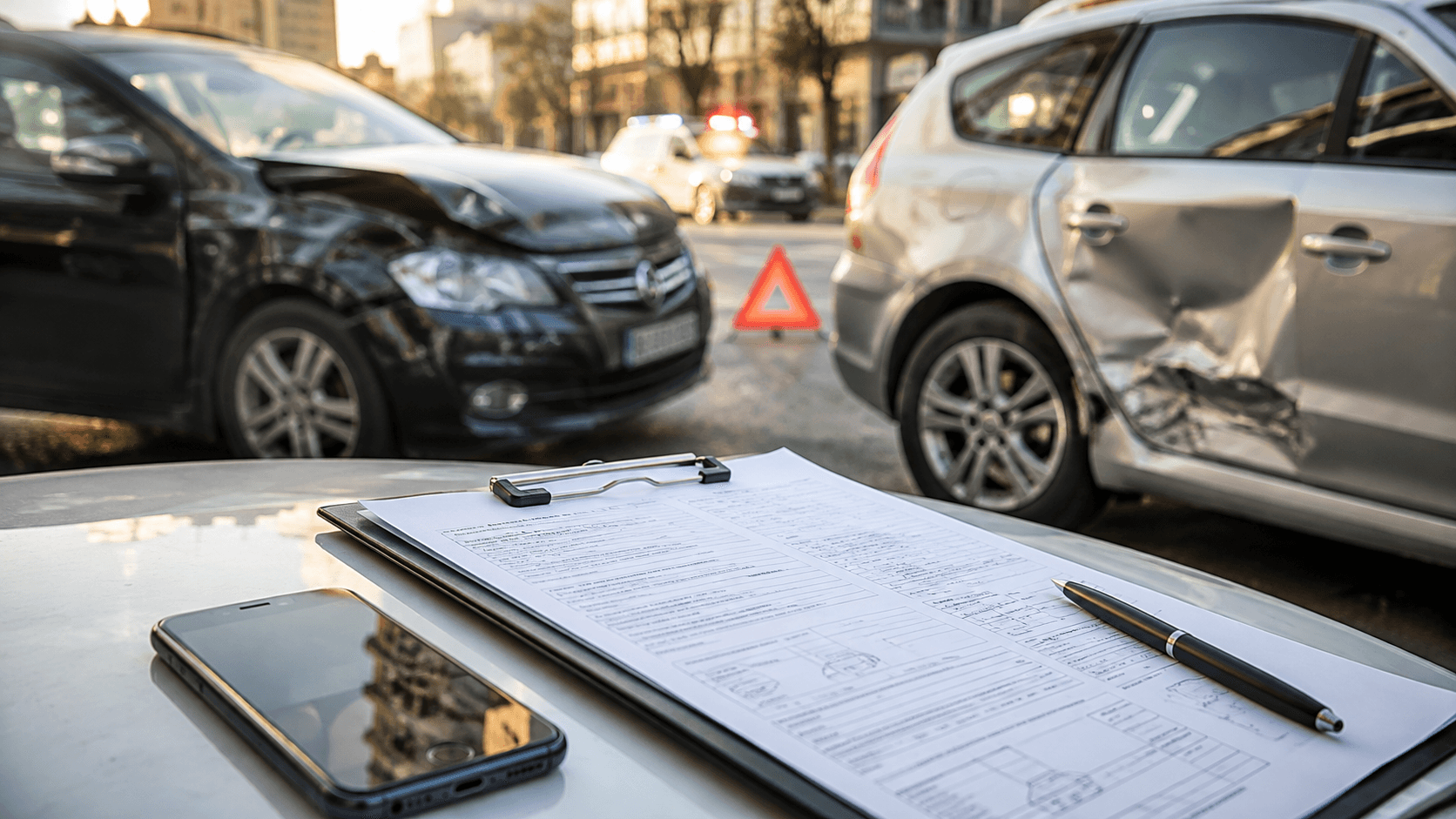
A traffic accident is one of life's most unexpected moments.
Once the shock wears off, one of the first questions that comes to mind is usually:
“Who's going to cover my losses — can I claim compensation?”
In this guide, we walk through the compensation process after a traffic accident, question by question.
What Should I Do First After a Traffic Accident?
First, make sure everyone is safe and call emergency services if needed.
Then, if possible, follow these steps:
Take photos of the accident scene and the vehicles.
Have an accident report prepared (for accidents involving only property damage, the parties can also prepare a joint report by agreement).
Collect witness information if available.
Note down the other party's insurance policy details.
If there's an injury, go to the hospital and keep all medical records.
Who Can I Claim Compensation From?
You can file a claim with the at-fault driver's mandatory traffic insurance provider.
If the insurance company doesn't cover the loss, or the coverage is insufficient, a lawsuit can be filed against the at-fault driver and the vehicle owner.
What Does Mandatory Traffic Insurance Cover?
Mandatory traffic insurance (Compulsory Motor Vehicle Liability Insurance) covers the property damage and bodily harm the at-fault vehicle causes to the other party, up to a certain coverage limit.
As a rule, this insurance only covers the other party's loss — damage to the at-fault driver's own vehicle is not covered.
Can I Get Moral Damages From the Insurance Too?
Mandatory traffic insurance generally covers only property damage and certain items tied to bodily harm; moral damages are, as a rule, outside this coverage.
However, if the vehicle owner also has an “Optional Liability Insurance” policy with a “Moral Damages Add-on,” the insurance company can be held liable for moral damages as well.
Otherwise, moral damages must be claimed directly from the at-fault driver through a lawsuit.
What Does Property/Material Compensation Cover?
The items covered by material compensation vary by the type of accident:
Treatment and recovery costs
Lost income due to temporary or permanent inability to work
Vehicle repair costs (including diminished value)
Other accident-related expenses (transportation, care, etc.)
In case of death, funeral expenses and loss-of-support compensation
Can I Claim for My Vehicle's Diminished Value?
Yes.
Even after repair, the drop in your vehicle's resale value (diminished value) can be claimed as a separate compensation item.
How Is the Amount of Moral Damages Determined?
The law doesn't set a fixed amount for moral damages.
The court determines the amount case by case, considering the severity of the incident, the parties' economic and social circumstances, the degree of fault, and equity.
Can I Still Get Compensation If I Was Partly at Fault?
Yes, compensation can still be claimed even with partial fault — but the amount is reduced in proportion to your degree of fault.
For example, if you're found 30 percent at fault, you can claim 70 percent of your loss.
What If a Relative of Mine Died in the Accident?
In fatal accidents, relatives who relied on the deceased's support (spouse, children, parents, etc.) can claim loss-of-support compensation.
Relatives can also file a separate moral damages claim in their own name.
What's the Time Limit for Filing a Compensation Lawsuit?
As a general rule, the lawsuit must be filed within 2 years of when the injured party learned of the loss and the liable party, and in any case within 10 years of the accident.
If the accident also constitutes a crime (e.g., causing injury or death through negligence), the longer criminal statute of limitations under the Turkish Criminal Code applies instead — up to 15 years for fatal accidents.
When Should I File a Claim With the Insurance Company?
We strongly recommend filing your insurance claim within 2 years of the accident date as well; delay can result in losing your rights.
Can I Still Get Compensation If No Accident Report Was Prepared?
Yes, compensation can still be claimed — but proving fault and loss can be more difficult.
In this case, witness statements, camera footage, and hospital records become critically important evidence.
What If the Other Party Was Uninsured or Fled the Scene?
If the other vehicle was uninsured, or the driver cannot be identified (hit-and-run), victims can, under certain conditions, apply to the Assurance Account (Güvence Hesabı) — a fund that compensates victims in such cases.
What Not to Do
Rushing to sign a settlement with the insurance company
Agreeing to a low amount before the full extent of your loss is clear can make it harder to make additional claims later.
Cutting your medical follow-up short
Complete documentation of treatment and medical reports forms the basis of your compensation claim.
Missing the statute of limitations
Pay particular attention to the 2-year period starting from when you learned of the loss.
Quick Checklist
Gather evidence such as the accident report or camera footage.
Keep all medical reports and expense documents.
Record the other party's insurance details.
File your insurance claim within the time limit.
Consult a lawyer before agreeing to a quick settlement.
Track the applicable statute of limitations.
Frequently Asked Questions
Is the process easier if I was not at fault at all?
A clear determination of fault generally simplifies the process, but the type and amount of loss are still assessed separately.
Am I required to accept the insurance company's offer?
No, you're not required to accept it — you can reject an offer you find insufficient and pursue a lawsuit instead.
Can I claim moral damages in an accident with only property damage?
Moral damages generally require bodily harm or a serious violation of personal rights; they typically don't arise from purely property-damage accidents.
The accident happened years ago — can I still sue?
If the statute of limitations has expired, the right to sue is lost — which is why it's important to have the applicable periods assessed by a lawyer for your specific case.
Can I claim compensation if I was a pedestrian or passenger in the accident?
Yes, pedestrians and passengers can also claim compensation for losses arising from the accident.
Conclusion
The compensation process after a traffic accident depends heavily on gathering the right evidence and tracking the applicable deadlines.
The insurance company's first offer is usually negotiable and may not fully reflect your actual loss.
If you've been in a traffic accident, we recommend speaking with a lawyer as soon as possible to fully assess your rights.
Atalya Hukuk Bürosu provides legal counsel and litigation support in Antalya for material and moral compensation claims arising from traffic accidents.
This article is for general informational purposes only and does not constitute legal advice. Please consult a lawyer for an assessment specific to your situation.
Sources
• Turkish Code of Obligations No. 6098, Arts. 49-72
• Highway Traffic Law No. 2918
• Turkish Criminal Code No. 5237 (provisions on causing injury/death through negligence)

This content was prepared and reviewed by the legal team at Atalya Hukuk Bürosu.
Meet Our Team →Related Articles

How to Object to an Enforcement Proceeding in Turkey — 2026 Guide
You've learned an enforcement proceeding has started against you and received a payment order. How many days do you have to object, does objecting stop the process, what happens if you don't, and can your wages be seized? A complete guide.
Read More→
What Is a Reserved Share? Being Cut Out of an Inheritance in Turkey — 2026 Guide
My father left everything to my sibling — do I have no rights? My mother “sold” her house before she passed, but no money changed hands. What is a reserved share, who does it cover, how do you sue over hidden inheritance assets, and is there a time limit? A complete guide.
Read More→
What Are Your Rights If You're Taken Into Police Custody in Turkey? 2026 Guide
The police have stopped you, taken you into custody, or called you in for questioning. Do you have the right to remain silent? Must you answer without a lawyer present? How long can custody last, and how do you object? Here's a full guide to your rights under the Constitution and CMK.
Read More→