
Published on August 21, 2026
I Sent Money to an IBAN and Was Scammed: How Can I Recover My Money in Turkey?
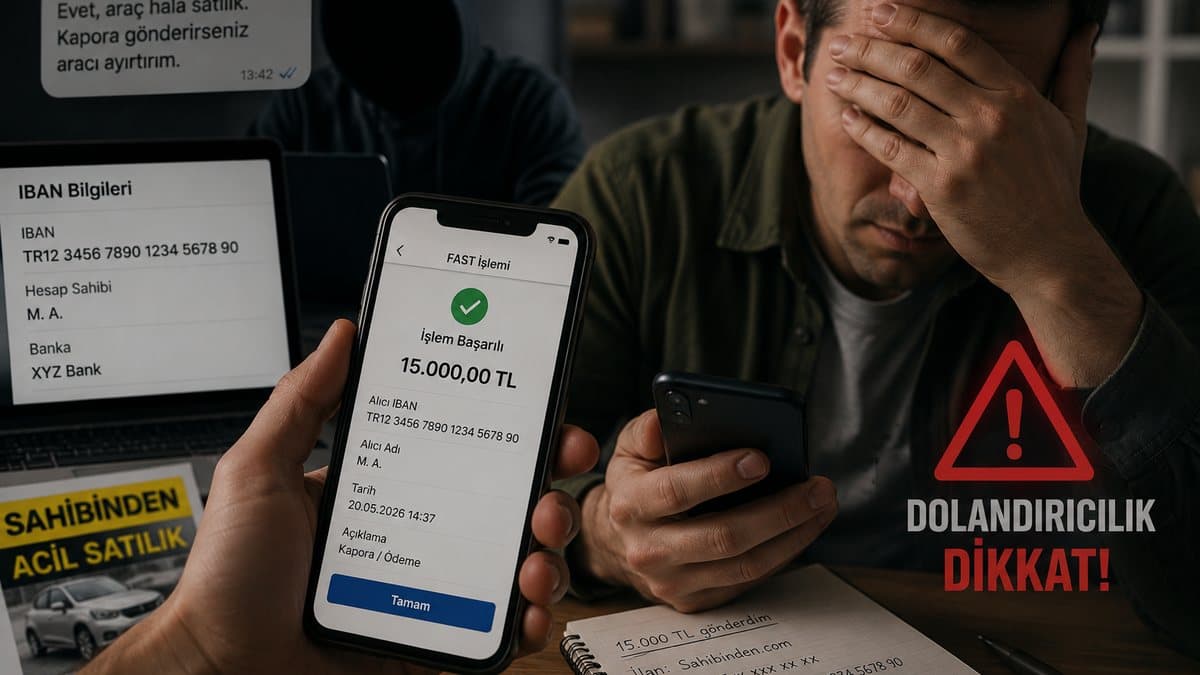
Bank transfer scams have become increasingly common in Turkey, particularly in online shopping, fake rental listings, vehicle deposits, investment scams and impersonation fraud.
The first question victims usually ask is:
“I transferred money to an IBAN and realized that I was scammed. Can I get my money back?”
There is no automatic answer.
Recovery depends on factors such as how quickly the incident is reported, whether the funds remain in the recipient account and whether the money has already been transferred to additional accounts.
What Should I Do Immediately After an IBAN Scam?
If you believe you have been defrauded:
Contact your bank immediately.
Inform the bank that the transfer resulted from suspected fraud.
Ask whether the recipient bank can be notified.
Preserve the transfer receipt.
Save all communications with the suspected scammer.
Record the IBAN, phone number and social media account involved.
Consider promptly contacting the police or Public Prosecutor's Office.
Time may be particularly important if the funds are still located in the original recipient account.
Can My Bank Reverse an EFT or FAST Transfer?
Not automatically.
Once the funds have reached the recipient account, the sender generally cannot simply cancel the payment because they later changed their mind.
However, where fraud is suspected, the bank should be informed immediately so that the transaction can be reviewed under the institution's applicable procedures.
How Do I File a Criminal Complaint?
A victim may report suspected fraud to law enforcement authorities or the competent Public Prosecutor's Office.
The complaint should clearly explain:
• How contact was established,
• What representations were made,
• The amount transferred,
• The recipient IBAN,
• The date and time of the payment,
• The phone numbers or online accounts used.
Evidence of the deceptive conduct is particularly important in distinguishing fraud from an ordinary contractual dispute.
Can a Bank Account Be Frozen During an Investigation?
Depending on the legal requirements and circumstances, Turkish criminal procedure permits protective measures concerning assets suspected of being connected to criminal activity.
Recent fraud investigations announced by Turkish prosecution authorities have included examination of bank movements and protective measures concerning accounts and other assets.
However, filing a complaint does not mean that the transferred money will automatically return to the victim immediately.
Can Authorities Identify the Owner of the IBAN?
A bank account is opened in the name of a natural or legal person.
Competent authorities may therefore investigate the account holder and transaction history through the applicable legal procedures.
However, the person receiving the transfer may not always be the individual who directly communicated with the victim.
What Is a “Rented IBAN” or Money Mule Account?
Fraud networks may use bank accounts belonging to third parties.
Individuals may be offered money in exchange for allowing others to use their account.
The account can then be used to receive and move proceeds generated from scams.
Turkish prosecution authorities issued specific warnings in 2026 concerning individuals who allow others to use their bank accounts.
Is Allowing Another Person to Use My Bank Account Risky?
Yes.
Where an account is knowingly used for fraud, illegal betting, money laundering or other criminal activity, the conduct of the account holder may become part of a criminal investigation.
The person's knowledge, intention and financial activity are evaluated according to the facts of the particular case.
What Happens If the Money Is Immediately Transferred Elsewhere?
Fraud proceeds may quickly be moved through several bank accounts, electronic money services or cryptocurrency accounts.
This can make tracing and recovery more difficult.
For this reason, prompt reporting can be particularly important.
What Evidence Should I Preserve?
Keep:
• Bank transfer receipts,
• Recipient IBAN details,
• Phone numbers,
• WhatsApp conversations,
• SMS messages,
• Social media profiles,
• Advertisements,
• Website addresses,
• Emails,
• Voice messages,
• Order or shipping information.
Do not delete communications simply because the scammer has blocked you.
I Bought Something Online but It Never Arrived. Is That Automatically Fraud?
No.
Not every failed delivery constitutes criminal fraud.
A genuine contractual or commercial dispute may exist.
Fraud generally requires deceptive conduct intended to induce the victim to provide a financial benefit.
The particular facts therefore need to be examined.
I Sent a Deposit for a Car or Apartment
Fake vehicle and rental advertisements are common forms of online fraud.
Victims may be pressured to act quickly with statements such as:
“Someone else wants the car.”
“Send the deposit now and I will reserve it for you.”
If fraud occurs, preserve the advertisement, the correspondence, the recipient IBAN and payment receipt.
Someone Claimed to Be a Bank Employee
Impersonation scams involving banks and public institutions continue to occur.
Victims should never provide internet banking passwords or SMS verification codes to callers claiming to be bank employees or officials.
Can I Recover the Money?
Recovery may be possible, but it cannot be guaranteed.
The result can depend on:
• Whether the money is traced,
• Whether assets remain available,
• The outcome of the investigation,
• The role of the account holder,
• Other civil or criminal remedies.
Can I Sue the IBAN Holder?
Potential liability depends on the account holder's involvement.
A person who knowingly participated in the fraudulent scheme is legally different from someone whose account was used without their knowledge.
Each case therefore requires an individual assessment.
Common Mistakes After Being Scammed
Sending additional money
Fraudsters sometimes ask victims to pay a “tax,” “release fee” or additional transfer to recover the original money.
Deleting messages
Messages may contain important evidence.
Waiting too long
Funds may be rapidly moved between multiple accounts.
Publishing personal information online
Publishing unverified personal data about a suspected person may itself cause separate legal problems.
Quick Checklist
If you believe you have been scammed:
Contact your bank.
Save the transfer receipt.
Preserve the recipient IBAN.
Keep all WhatsApp and SMS messages.
Save screenshots of the advertisement or account.
Record relevant phone numbers.
Do not send additional money.
Consider promptly reporting the matter to the competent authorities.
Frequently Asked Questions
Can the bank automatically return my money?
Not necessarily. Once a transfer has been completed, automatic reversal is generally not guaranteed.
Can the authorities freeze the recipient account?
Protective measures may be available where the statutory requirements are satisfied.
Does knowing the IBAN holder guarantee recovery?
No.
Can scammers use another person's account?
Yes. Third-party accounts may be used as intermediary or money mule accounts.
Is every failed online purchase fraud?
No. Fraud must be distinguished from an ordinary contractual dispute.
Conclusion
In bank transfer fraud cases, speed and preservation of evidence are extremely important.
Victims should preserve digital communications, payment information and online account details and report the incident through appropriate channels without unnecessary delay.
Atalya Law Office provides legal services in Antalya concerning cybercrime, aggravated fraud, digital evidence and disputes involving bank transfers.
This publication is for general information purposes only and should not be considered legal advice for a particular case.

This content was prepared and reviewed by the legal team at Atalya Hukuk Bürosu.
Meet Our Team →Related Articles

Conditional Release and Probation in Turkey: Who Qualifies?
An overview of conditional release and probation under Turkish execution law: the good-conduct assessment, how the process works, and why applicable ratios should be confirmed with a lawyer.
Read More→
The Legal Process for Cryptocurrency Fraud: How to File a Complaint
A practical legal roadmap for cryptocurrency fraud victims: preserving evidence, notifying the exchange, filing a criminal complaint, and understanding the realistic limits of recovery.
Read More→
What Is an Ecrimisil Claim? The Cost of Living Rent-Free as a Co-Owner
When one co-owner of an inherited property lives there rent-free or collects all the rental income alone, the other co-owners can file an ecrimisil claim. Here is how it works.
Read More→