
Published on September 5, 2026
Buying Property in Antalya as a Foreigner: Legal Process and What to Watch For — 2026
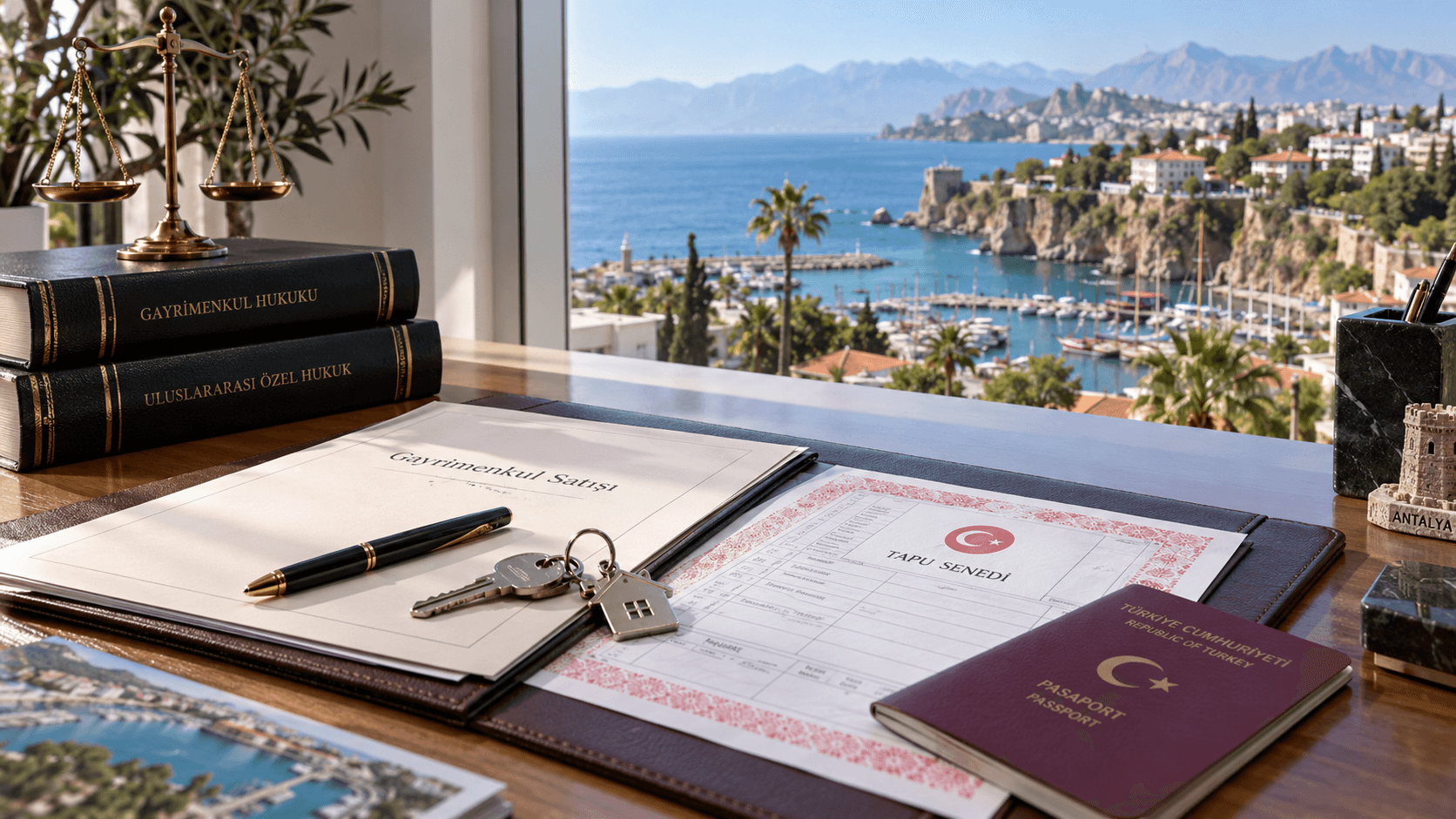
Thanks to its coastline, climate, and tourism infrastructure, Antalya has long been a favorite among foreign real estate investors.
Buyers from Russia, Germany, Iran, Iraq, and Gulf countries regularly purchase homes and land in Antalya.
But the process differs from a domestic purchase by a Turkish citizen in several important ways.
In this guide, we walk through the legal framework for foreigners buying real estate in Antalya, question by question.
Can Foreigners Buy Real Estate in Antalya?
Yes, under certain conditions, foreign nationals can acquire real estate in Turkey — including in Antalya.
The main regulation on this is Article 35 of Land Registry Law No. 2644.
Can Citizens of Every Country Buy Property in Antalya?
No, not everyone.
Rather than the old “reciprocity” principle, the law now relies on a list of countries whose citizens are permitted to acquire real estate — a list determined by the President.
This list can be updated based on national security, diplomatic relations, and foreign policy considerations.
For this reason, it's strongly recommended to confirm with the relevant Land Registry Office, before any transaction, whether the buyer's country of citizenship is currently on that list.
Is There a Limit on the Area That Can Be Acquired?
Yes.
The total area of real estate and limited real rights a foreign individual can acquire cannot exceed 30 hectares (300 dönüm) per person nationwide.
A certain percentage of the privately-owned land within a given district also acts as a ceiling on these acquisitions.
Can Property Be Purchased in Any Part of Antalya?
No.
Foreign acquisition of real estate may be restricted or subject to special permission in military security zones and certain areas considered strategically sensitive.
For this reason, it's important to check in advance, especially for properties near certain parts of the coastline.
How Does the Title Deed Transfer Process Work?
Broadly speaking, the process involves reviewing the property's title deed record and any encumbrances on it (mortgages, liens, etc.), preparing a sale agreement or promise-to-sell contract, and completing the official transfer at the relevant Land Registry Office.
What Documents Does a Foreign Buyer Need?
Generally, a passport, a Turkish tax number (if applicable), a biometric photo, and, where necessary, documents prepared through a sworn translator are required; additional documents may be requested depending on the nature of the transaction.
What Are the Title Deed Fees and Other Costs?
During the transfer, a title deed fee (tapu harcı) of 4% total is collected based on the property's declared sale value; this is generally split evenly between the buyer and seller (2% each).
In addition, revolving fund fees, and where necessary translation and notary costs, should also be factored in.
Can Buying Property Lead to a Residence Permit?
Owning real estate in Turkey can, under certain conditions, serve as a basis for a short-term residence permit application.
The details and current requirements of the residence permit process should be assessed under immigration legislation.
How Can Real Estate Investment Lead to Turkish Citizenship?
Under the exceptional path to Turkish citizenship, a foreign national who acquires real estate worth at least USD 400,000 and commits not to sell it for 3 years may apply for Turkish citizenship, provided the other conditions are met.
Since this amount and these conditions are subject to change, it's important to confirm the current requirements before applying.
What Are Common Risks in Selling to Foreigners in Antalya?
Common risks in practice include not verifying that the title deed record is current and free of encumbrances, not checking the zoning status, paying a deposit without verifying the seller's authority, and a declared title deed value that doesn't reflect the actual sale price.
Is There Any Reporting Obligation After the Purchase?
Depending on the nature of the acquisition, tax reporting obligations may arise; it's advisable to review the current tax legislation on this with a specialist.
What Not to Do
Paying a deposit without reviewing the title deed record
Whether the seller is genuinely authorized, and whether the property carries any encumbrances, should be checked beforehand.
Not checking the country restriction list
Since the list of eligible countries can be updated, the current status should be confirmed before any transaction.
Investing without clarifying citizenship or residence permit requirements
If citizenship or a residence permit is the goal, the current requirements should be confirmed with a lawyer before the transaction.
Quick Checklist
Confirm the buyer's country is on the current list of eligible countries.
Review the title deed record and any encumbrances.
Check the zoning status.
Keep the area limit (30 hectares) in mind.
If citizenship/residence is your goal, confirm the current threshold and requirements.
Handle the entire process together with a real estate lawyer.
Frequently Asked Questions
Can every foreign national buy property in Antalya?
No, the buyer's country of citizenship must be on the list of eligible countries determined by the President.
Can I sell the property whenever I want?
As a rule, yes — but for property acquired as part of a citizenship application, the 3-year non-sale commitment must be observed.
Does buying property automatically grant citizenship?
No, a specific investment threshold must be met and the application process completed; the purchase alone doesn't automatically grant citizenship.
Can I handle the title deed process without a lawyer?
It's possible, but especially for foreign buyers, having a lawyer verify the title deed record, zoning status, and legal compliance reduces risk.
Conclusion
Buying real estate as a foreigner in Antalya can be a secure investment when handled correctly — but care is needed around country restrictions, area limits, and citizenship/residence permit requirements.
Atalya Hukuk Bürosu provides legal counsel in Antalya for real estate law, property sales to foreigners, citizenship applications, and residence permit processes.
This article is for general informational purposes only and does not constitute legal advice. Please consult a lawyer to confirm current requirements.
Sources
• Land Registry Law No. 2644, Art. 35
• Regulation on the Implementation of the Turkish Citizenship Law (provisions on exceptional citizenship)

This content was prepared and reviewed by the legal team at Atalya Hukuk Bürosu.
Meet Our Team →Related Articles

How to Choose a Lawyer in Antalya, Turkey — A 7-Point Guide
With dozens of law firms in Antalya, how do you choose the right one for your case? Specialization, bar registration, transparent fees, and more — the criteria to check before trusting a lawyer with your case.
Read More→
I'm Facing Workplace Mobbing in Turkey — What Are My Rights? 2026 Guide
Is your manager or coworkers systematically wearing you down, excluding you, or humiliating you? What is mobbing under Turkish law, how is it proven, and can you resign with just cause and still claim severance pay? A complete guide with recent case law.
Read More→
I Was Insulted on Social Media in Turkey — What Are My Rights? 2026 Guide
Someone insulted you on Instagram, X, or WhatsApp. Is this a crime, how long do you have to file a complaint, does mediation apply, and can you also claim moral damages? A guide covering a major 2024 legal change and everything else you need to know.
Read More→